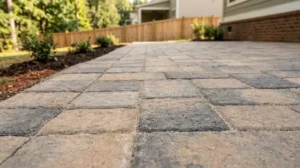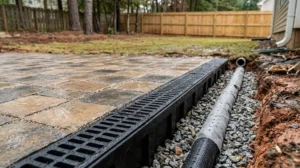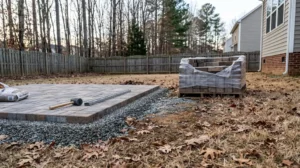
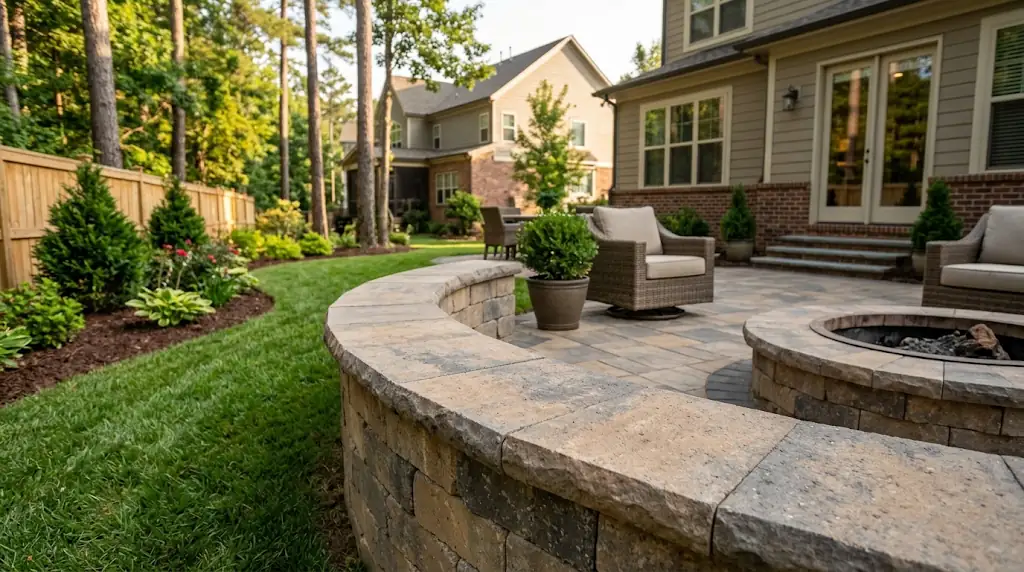
Adding a professionally installed paver patio in the Triangle market yields an average return on investment (ROI) of 65% to 75% at resale, recovering the majority of its upfront installation cost while significantly reducing days on market (DOM). For residential properties across high-density submarkets like Cary, Apex, Morrisville, and Holly Springs, an engineered paver patio converts unusable sloping clay into functional outdoor living square footage that modern homebuyers actively seek.
Hardscape ROI Comparison in Central North Carolina
Outdoor living improvements vary dramatically in terms of capital recovery, durability, and buyer appeal across Wake, Chatham, and Lee counties.
| Exterior Improvement | Average Installed Cost (Triangle) | Estimated Resale ROI (%) | Maintenance Liability for Buyers | Typical Expected Lifespan |
|---|---|---|---|---|
| Interlocking Paver Patio | $18 – $38 / sq. ft. | 65% – 75% | Very Low (Occasional re-sanding) | 30 to 50+ Years |
| Composite Decking (Trex/TimberTech) | $35 – $55 / sq. ft. | 60% – 68% | Low (Periodic pressure washing) | 25 to 30 Years |
| Pressure-Treated Wood Deck | $22 – $32 / sq. ft. | 45% – 55% | High (Annual staining, rot repairs) | 10 to 15 Years |
| Stamped Concrete Patio | $15 – $26 / sq. ft. | 40% – 50% | Moderate to High (Resealing, crack repairs) | 8 to 12 Years |
| Standard Broom-Finish Concrete | $8 – $14 / sq. ft. | 30% – 40% | High (Uncontrolled cracking on clay) | 10 to 15 Years |
Why Triangle Real Estate Buyers Value Paver Patios
The Triangle real estate market features a demographic driven by corporate expansions across Research Triangle Park (RTP), healthcare networks, and regional technology hubs. These buyers prioritize move-in-ready, low-maintenance properties over homes requiring immediate landscape rehabilitation.
1. Maximizing Usable Space on Compact Lots
Newer residential subdivisions in Cary (Amberly, Preston), Apex (Bella Casa, Sweetwater), Morrisville (Kitts Creek), and Holly Springs (12 Oaks) feature smaller, tightly zoned lot footprints ranging from 0.12 to 0.25 acres.
- Functional Living Space: On a compact lot, a 400-square-foot paver patio functions as an exterior extension of the primary living room or kitchen.
- Elimination of Turf Headaches: Central North Carolina’s combination of summer drought, dense shade from remaining hardwood buffers, and poor-draining soil makes maintaining pristine Fescue lawns challenging. Hardscaping replaces muddy, thin turf with clean, functional square footage that requires zero mowing or irrigation.
2. Year-Round Outdoor Utility
According to regional climate records from the North Carolina State Climate Office, the eastern Piedmont enjoys more than 215 sunny to partly sunny days each year and an average winter high temperature in the low 50s.
- Unlike northern housing markets where outdoor spaces remain snow-covered for four months, Triangle homeowners utilize outdoor patios from February through November.
- Buyers view features like integrated seat walls, outdoor kitchen islands, and fire pit rings as functional living zones rather than seasonal luxuries.
How Real Estate Appraisers Value Paver Patios in Wake & Chatham Counties
Licensed real estate appraisers do not calculate exterior patios as Gross Living Area (GLA) because outdoor hardscapes lack interior environmental controls. Instead, appraisers evaluate patios on the Sales Comparison Approach through direct site improvement adjustments:
- Site Amenity Line Adjustments: An appraiser identifies recent comparable sales (“comps”) within a 1-to-3-mile radius. A home featuring an engineered 500-square-foot paver patio with a built-in fire pit typically receives a $10,000 to $20,000 positive line-item adjustment against comparable homes with bare builder-grade turf or small 10′ x 10′ concrete pads.
- Appraisal Condition Ratings (C-Ratings): Fannie Mae and Freddie Mac require appraisers to grade overall property condition on a scale from C1 to C6. An immaculate paver outdoor living space elevates a home’s exterior rating from C4 (adequate condition) to C3 or C2 (well-maintained with high-end updates), directly raising the overall appraised valuation ceiling.
- Prevention of Inspection Repair Escrows: Deteriorated wood decks and severely cracked concrete flatwork are standard “red-flag” items during North Carolina buyer home inspections. Home inspectors routinely cite cracked concrete as structural foundation settlement or slip hazards, triggering repair negotiations that can delay closing. In contrast, interlocking pavers laid over an engineered aggregate base show no structural cracking, preventing inspection escrow disputes.
Pavers vs. Alternative Outdoor Materials: Buyer Perception
Buyers in Central North Carolina quickly recognize the operational drawbacks of wood decks and poured concrete:
The Wood Deck Liability in Central NC Humidity
Central North Carolina’s intense summer humidity and native wood-destroying insects (carpenter bees and subterranean termites) severely degrade traditional pressure-treated pine.
- Within 4 to 6 years, unmaintained wood decks in Cary and Apex warp, splinter, and rot at the ledger board.
- Buyers calculate the deferred maintenance costs of recurring power washing, chemical sealing, and eventual structural replacement ($10,000 to $18,000), lowering their opening purchase offers accordingly.
The Cracked Concrete Stigma
As documented in the NC State Extension Soils Guide, Piedmont Cecil red clay exhibits a high shrink-swell capacity that routinely fractures monolithic concrete slabs within three to five seasons.
- A cracked, uneven concrete slab creates an immediate visual perception of poor drainage or structural ground failure.
- Interlocking pavers articulate microscopically with underlying soil expansion without breaking, preserving an immaculate aesthetic year after year.
Hardscape Features That Yield the Highest Resale Multipliers
To maximize capital return during a future property sale, hardscape layouts should focus on features with broad buyer demand:
- Integrated Gas or Wood Fire Pits ($2,500 – $6,000): Fire features extend patio utility across late fall and winter, serving as a primary visual focal point in listing photos.
- Hardwired Low-Voltage LED Lighting ($1,800 – $3,500): Under-cap coping lights on seat walls and riser lights on paver steps create exterior depth, improving evening showings and security.
- Permeable Paver Systems (PICP): Properties subject to strict municipal impervious surface caps under Town of Cary Residential Standards benefit from permeable pavers, which expand usable hardscape footprints while complying with local stormwater rules.
- Neutral, High-SRI Color Palettes: Selecting warm grays, linen, or natural tan tones that complement the existing home exterior appeals to the widest buyer demographic while keeping the surface cool under summer sun.
Submarket Insights: What Sells Across Triangle Neighborhoods
- Cary & Morrisville: Tech professionals and relocation buyers demand modern, clean-lined, low-maintenance living. Large-format architectural pavers and 20mm porcelain slabs deliver maximum equity.
- Apex & Holly Springs: High concentration of family households with children and pets. Buyers prioritize large, enclosed patio fields with perimeter seat walls, drainage mitigation, and integrated barbecue grill enclosures.
- Pittsboro & Sanford: Rapidly expanding suburban and master-planned communities like Chatham Park. Properties feature larger acreage where buyers expect natural stone textures, rustic retaining walls, and custom fire pit gathering spaces.
A professionally engineered paver patio is an investment in functional square footage that delivers personal enjoyment during your residency and tangible equity when you list your home. If you are preparing to elevate your property’s exterior appeal in Cary, Apex, Morrisville, Holly Springs, Fuquay-Varina, Pittsboro, or Sanford, contact Cary Pavers through our contact page to arrange an on-site design consultation and property value assessment.