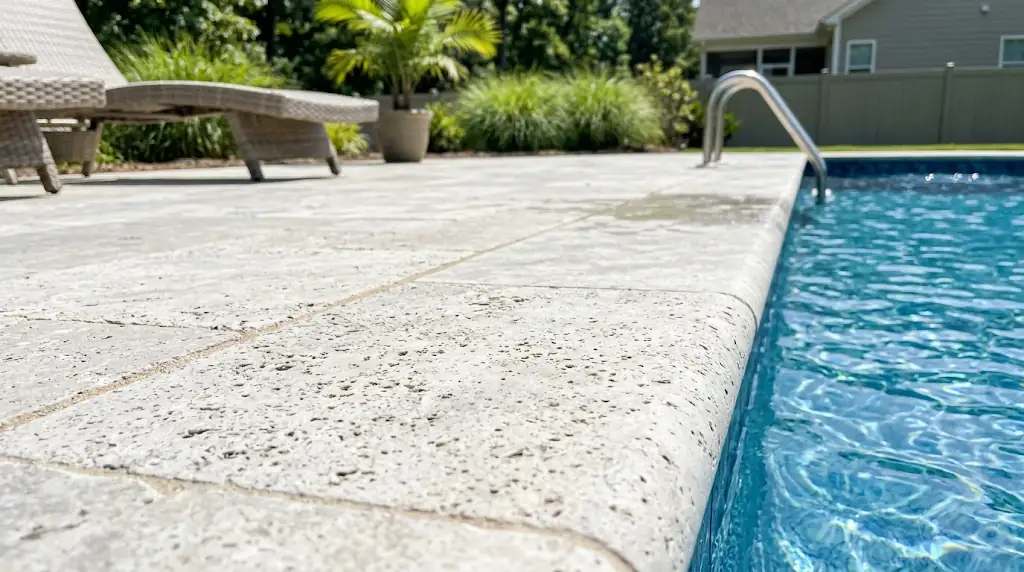
Natural light-colored travertine, shellstone, and light-toned outdoor porcelain pavers remain the coolest pool deck materials in Central North Carolina summers, maintaining surface temperatures up to 20°F to 30°F cooler than dark stamped concrete, brick, or standard gray concrete pavers. During 90°F to 95°F July and August heatwaves across the Triangle, these high-solar-reflectance materials prevent bare-foot burns while offering high slip resistance against pool splashout and summer downpours.
Surface Temperature Comparison: Pool Pavers in 95°F NC Heat
Solar Reflectance Index (SRI) measures a material’s ability to reject solar heat. Higher SRI values translate directly to cooler bare-foot surfaces under direct summer exposure.
| Paver Material | Typical Color Range | Solar Reflectance Index (SRI) | Peak Surface Temp at 95°F Ambient | Barefoot Comfort Rating | Saltwater & Chlorine Resistance |
| Light Ivory / Silver Travertine | Beige, Ivory, Light Silver | 70 – 82 | 102°F – 110°F | Exceptional (Stays cool) | High (Requires penetrating sealer) |
| Shellstone / Coquina Pavers | Off-White, Cream, Shell Embed | 80 – 88 | 98°F – 105°F | Exceptional (Coolest natural stone) | High |
| Light Outdoor Porcelain (20mm) | Sand, Ivory, Warm White, Light Ash | 65 – 78 | 106°F – 114°F | Excellent (Rapid heat dissipation) | Total (Completely non-porous / impervious) |
| Light Concrete Pavers | Cream, Linen, Off-White | 45 – 55 | 118°F – 128°F | Moderate (Warm under sustained sun) | High (Requires sealing for salt pools) |
| Standard Gray Concrete Pavers | Natural Concrete Gray | 30 – 40 | 128°F – 138°F | Poor (Hot to bare feet) | High |
| Charcoal / Espresso Concrete Pavers | Dark Charcoal, Slate, Brown | 10 – 20 | 142°F – 155°F | Dangerous (Risk of skin burns) | Moderate |
| Standard Clay Brick Pavers | Deep Red, Terracotta | 20 – 35 | 134°F – 146°F | Very Poor (Retains heat until night) | High |
| Stamped Concrete (Dark / Sealed) | Brown, Tan, Gray with Gloss Sealer | 15 – 30 | 138°F – 152°F | Extreme (Hot, slick, blistering) | Poor (Acrylic sealers peel/haze) |
Central NC Summer Climate: The Science of Heat Absorption Around Pools
According to climate records from the North Carolina State Climate Office, the Triangle region averages over 35 to 45 days per year with temperatures reaching or exceeding 90°F, paired with intense ultraviolet radiation and afternoon humidity levels above 70%.
- Thermal Mass and Heat Retention: Dense, dark materials absorb shortwave solar radiation during midday and store it as thermal energy. Low-SRI surfaces (like red clay brick or dark gray concrete) act as heat sinks, re-radiating heat well into the evening hours and making pool decks uncomfortable even after the sun dips behind the pine tree line.
- Reflectance vs. Emittance: Cool materials require both high solar reflectance (bouncing UV rays away rather than absorbing them) and high thermal emittance (releasing absorbed heat rapidly). Light natural stones and vitrified porcelain lead in both categories, preventing heat buildup under prolonged exposure in Cary, Apex, and Holly Springs backyards.
Top 4 Cool Paver Materials for Triangle Pool Decks
1. Light Travertine Pavers (Ivory, Walnut Light, Silver)
Travertine is a terrestrial sedimentary limestone formed around mineral springs.
- Thermal Performance: Its natural micro-porous structure contains tiny subterranean air pockets that break up heat conduction, keeping ivory and cream cuts remarkably cool to the touch even under blistering midday sun.
- Slip Resistance: Unfilled, tumbled travertine provides exceptional wet traction. Water absorbs into surface voids or drains away, creating a textured grip that exceeds OSHA wet coefficient recommendations.
- Durability in NC: Travertine handles Central NC’s mild winter freeze-thaw cycles effectively when dry-laid over an open-graded stone base. It requires a siloxane-based penetrating sealer to protect against staining from dropped barbecue grease, pine tannins, or pool sanitizers.
2. Shellstone / Coquina Stone Pavers
Formed from fossilized shell fragments and limestone, shellstone provides the highest natural solar reflectance available for pool perimeters.
- Thermal Performance: True shellstone remains comfortable under bare feet in high summer heat. The shell fragments reflect solar energy and resist heat storage.
- Aesthetics and Texture: Shellstone offers an authentic coastal look with embedded fossils and shells. It is naturally non-slip, making it a favorite for zero-depth entries, sun shelves, and pool coping in luxury homes across Cary (Preston, MacGregor) and Apex.
3. Light-Toned 20mm Outdoor Porcelain Slabs
Outdoor-rated porcelain pavers are manufactured from dense kaolin clays fired at 2,200°F.
- Thermal Performance: In light color variations (ivory, chalk, light beige), modern textured porcelain releases heat faster than standard 2⅜-inch thick concrete pavers due to its vitrified composition and lower thermal mass.
- Chemical and Salt Resistance: Completely impervious with a water absorption rate under 0.05%, porcelain is unaffected by saltwater chlorinators, muriatic acid spills, or shock treatments.
- Algae and Mold Resistance: Triangle humidity frequently breeds green algae on damp concrete around pools. Porcelain’s non-porous glass-like body prevents mold or algae spores from taking root, requiring only a simple garden hose rinse to clean.
4. Specially Engineered Light-Reflective Concrete Pavers
If natural stone or porcelain exceeds the project budget, premium concrete paver manufacturers (such as Belgard and Techo-Bloc) manufacture units formulated with white Portland cement and light aggregate mixes.
- Color Matters: Selecting hues such as “Linen,” “Ivory,” or “Cream” keeps surface temperatures 15°F to 20°F below charcoal or dark chestnut options.
- Surface Finishes: Smooth-face pavers can become slick when wet; look for shot-blasted, textured, or slate-embossed finishes to ensure adequate slip resistance around splash zones.
The Danger of Acrylic Sealers on Pool Decks
A common hardscape mistake across Wake and Chatham counties is coating pool decks with high-gloss, topical acrylic sealers.
- The Heat Multiplier Effect: Glossy sealers act as a plastic barrier that traps solar heat on the surface, increasing paver surface temperatures by up to 10°F.
- The Slip Hazard: Topical sealers fill in micro-textures, turning damp concrete into a hazardous sheet of ice when wet.
- The Blushing Problem: In humid NC summers, groundwater vapor moving up through the subgrade becomes trapped underneath clear acrylic film, causing it to turn cloudy white (“blushing”) and blister off in sheets.
- The Solution: Pool decks should always be treated with penetrating, breathable impregnating sealers (fluoropolymer or silane/siloxane). These sealers coat the capillary pores of the stone without forming a surface film, preserving natural wet traction, allowing vapor evaporation, and keeping the deck cool.
Coping and Edge Profiles: Protecting Hands and Feet
The pool edge (coping) takes the brunt of direct hand and foot contact as swimmers climb in and out of the water.
- Bullnose Coping: Rounded bullnose edges in matching ivory travertine or smooth concrete prevent skin scratches and leg scraping along waterlines.
- Cantilever / Modern Drop-Face Edge: Sleek, 90-degree square edges favored in contemporary Pittsboro and Morrisville builds. When cut from light travertine or 20mm porcelain, drop-face coping keeps the perimeter cool to touch for seated swimmers.
- Expansion Joints: North Carolina pool decks require a minimum ½-inch flexible expansion joint between the concrete pool bond beam and the surrounding paver deck, filled with closed-cell backer rod and polyurethane joint sealant (such as Sikaflex). This prevents hydraulic pressure from pool wall movement from cracking or lifting the adjacent deck pavers.
Professional Pool Deck Engineering in the Triangle
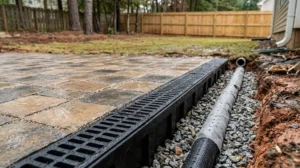
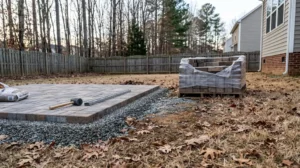
Installing a lasting, cool pool deck over Central North Carolina’s native clay subgrade requires excavating a minimum of 8 to 10 inches, installing non-woven separation fabric, and laying open-graded angular stone bases that facilitate immediate lateral water drainage away from pool shells and foundations.
If you are building a new pool or replacing an aged, cracked concrete deck in Cary, Apex, Morrisville, Holly Springs, Fuquay-Varina, Pittsboro, or Sanford, select materials engineered for local humidity and summer heat. Contact Cary Pavers through our contact page to view material samples in natural daylight and receive a fixed-price pool deck proposal.